
 EN
EN



The Shift From Functional Water to Sensory Architecture
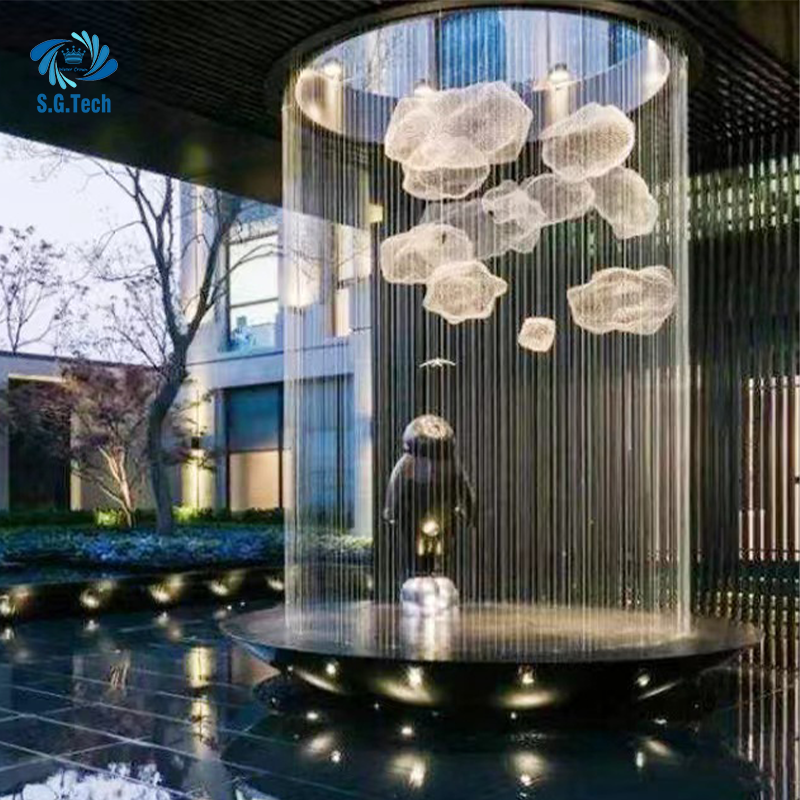
Walk into any high-end spa property today, and the first thing that hits isn't the reception desk—it's the atmosphere. More specifically, it's the sound of water falling in a controlled, rhythmic sheet, often paired with a scent that feels almost imperceptible until it's suddenly everywhere. That's not accidental. That's a rain curtain with aromatherapy injection, and it's become something of a calling card for luxury spas that understand the difference between a treatment and an experience.
The global emotional shower market—which includes aromatherapy showers, sound therapy systems, and multi-sensory water features—was valued at roughly 2.1 billion USD in 2024 and is projected to approach 4.5 billion USD by 2035, reflecting a compound annual growth rate around 7.1%. That kind of growth doesn't happen because people suddenly decided they like fancy showers. It happens because the economics of spa hospitality have shifted. Guest retention, repeat booking rates, and per-visit spend all correlate with how memorable the sensory environment is. A rain curtain isn't a shower. It's a threshold—a transition space between the outside world and the treatment room.
Why Water Curtains Beat Traditional Water Features for Aromatherapy Delivery
Here's the technical distinction that matters. Traditional water features—fountains, cascades, sheer descents—move water in ways that look impressive but don't do much for scent dispersion. The water volume is too high, the droplet size too large, and the aeration too inconsistent. A rain curtain, by contrast, creates thousands of individual water strands falling in parallel. The surface area exposed to air per gallon of water is dramatically higher.
That matters for aromatherapy because essential oils don't mix easily with water. They're hydrophobic. To get a scent into the air, the oil needs to be atomized or carried by water droplets that then break apart on impact or evaporate mid-air. A rain curtain achieves this naturally—the falling strands break into finer particles at the bottom basin, and the turbulence at the impact zone aerosolizes the oil compounds. When the aromatherapy oil is injected directly into the water flow upstream, the entire curtain becomes a delivery mechanism.
Some systems use a venturi injector positioned just after the pump, drawing essential oil concentrate into the water stream at a controlled ratio. Others use a dosing pump that meters oil into the supply line based on flow rate. Either way, the result is the same: every strand of falling water carries a micro-dose of the scent, and the sheer number of strands means the entire space gets saturated evenly. No hot spots, no dead zones.
A Case From a Resort Renovation in Southeast Asia
A resort property in southern Thailand went through a full spa renovation about two years ago. The original design had standalone diffusers placed around the treatment area, plus a decorative water wall that was purely visual. Guest feedback consistently mentioned that the scent felt "disconnected" from the water experience—nice, but not immersive.
The team swapped out the water wall for a rain curtain spanning about 3.5 meters across the entrance corridor, with an aromatherapy injection system tied to the curtain's recirculation loop. They ran lavender and chamomile blends during evening services and citrus-rosemary during morning hours. Within three months, post-treatment survey scores for "atmosphere" climbed by a measurable margin. More tellingly, the spa director noted that guests started lingering in the corridor after check-in, something that rarely happened before. The curtain became a psychological anchor—people associated the scent-water combination with the start of their wellness journey.
That's the kind of outcome that doesn't show up on a spec sheet but shows up on the P&L.
The Engineering Constraints That Matter
Rain curtains aren't plug-and-play. The aromatherapy injection adds a layer of complexity that catches some operators off guard.
First, essential oils degrade certain plastics and seals. Any component downstream of the injection point needs to be rated for oil exposure—silicone or EPDM seals, stainless steel or brass fittings, and polycarbonate or acrylic for any transparent sections. Standard PVC plumbing can turn brittle over time when exposed to concentrated oils.
Second, oil concentration matters more than most people realize. Too little and the scent is imperceptible; too much and it becomes cloying, even nauseating. The effective range typically falls between 0.5% and 2% oil-to-water ratio, depending on the oil's volatility and the room's air exchange rate. A space with high ceilings and open ventilation needs a higher concentration than a compact treatment room. Some systems incorporate a variable-speed dosing pump tied to a VOC sensor, adjusting output in real time. That's the premium tier, and it's becoming more common in properties charging upwards of $300 per treatment.
Third, maintenance cycles change. The oil leaves a residue—not much, but enough to require more frequent cleaning of the curtain's nozzles and the basin filter. Properties running continuous injection for 10 to 12 hours a day typically schedule a nozzle flush every two to three weeks, compared to monthly for a standard curtain.
The Sensory Science Behind Scent-Water Pairing
There's a neurological reason this combination works so well. The olfactory system connects directly to the amygdala and hippocampus—the brain regions responsible for emotion and memory. Sound, specifically the white-noise quality of falling water, has a calming effect on the autonomic nervous system. Put them together, and you get a paired-association effect that's stronger than either element alone.
Research in environmental psychology has shown that multi-sensory environments—where visual, auditory, and olfactory inputs are coordinated—produce higher ratings of "restorative quality" compared to single-sensory interventions. Spas aren't selling hydrotherapy; they're selling a shift in nervous system state. A rain curtain with aromatherapy accomplishes that shift in about 90 seconds, which is exactly the amount of time a guest spends walking from the reception area to the changing room.
That's not an accident. That's intentional choreography.
| Feature | Standard Water Feature | Rain Curtain with Aromatherapy |
|---|---|---|
| Surface area for scent dispersion | Limited to splash zone | Entire vertical plane of falling strands |
| Scent uniformity across space | Inconsistent, prone to drift | Even distribution via water strands |
| Guest perception of "immersion" | Visual only | Visual + olfactory + auditory |
| Maintenance frequency | Monthly cleaning | Biweekly nozzle flush + oil system check |
| Typical installation cost range | Lower initial investment | Moderate premium over standard curtain |
Where Rain Curtains Fall Short
No point pretending these systems are perfect for every setting. They're not.
In spaces with aggressive HVAC systems—high airflow, frequent air changes—the scent gets pulled out before it can accumulate. That's a design conflict that needs resolving at the architectural level, not the equipment level. Some properties have had to retrofit their air handling to reduce exchange rates during spa hours, which adds cost and complexity.
Outdoor installations face another challenge: wind. A gentle breeze can carry the scent away from the intended zone, wasting oil and confusing the guest experience. Covered outdoor spaces with wind breaks work fine; open-air setups generally don't.
And then there's the cost of the essential oils themselves. Pharmaceutical-grade or therapeutic-grade oils run significantly higher than commodity fragrance oils, and a rain curtain running eight hours a day can consume a non-trivial amount. The operational expense needs to be factored into the spa's pricing model, not treated as an afterthought.
The Bottom Line on Rain Curtains With Aromatherapy
Luxury spas use rain curtains with aromatherapy injection because the combination delivers something no standalone system can match: a full-body sensory threshold that signals "you have arrived" before the guest even touches water. The engineering is straightforward but demands attention to material compatibility, concentration control, and maintenance scheduling. The payoff, when executed correctly, is measurable in guest satisfaction scores and repeat bookings.
For properties considering the investment, the key is treating the rain curtain as an architectural element, not an accessory. It needs to be integrated into the space's flow, air handling, and guest journey from the beginning. Retrofit installations work—the Thailand resort proved that—but they're more expensive and require more creative problem-solving.
Companies like Guangdong Water Crown have been manufacturing water feature equipment and pool systems for years, with ISO and CE certifications backing their production capabilities. Their experience in the aquatic equipment space means they understand the material selection and system integration challenges that come with features like aromatherapy-injected rain curtains. That kind of manufacturing depth matters when you're specifying components that need to handle both water and oil exposure day in and day out.
Table of Contents
- The Shift From Functional Water to Sensory Architecture
- Why Water Curtains Beat Traditional Water Features for Aromatherapy Delivery
- A Case From a Resort Renovation in Southeast Asia
- The Engineering Constraints That Matter
- The Sensory Science Behind Scent-Water Pairing
- Where Rain Curtains Fall Short
- The Bottom Line on Rain Curtains With Aromatherapy