
 EN
EN


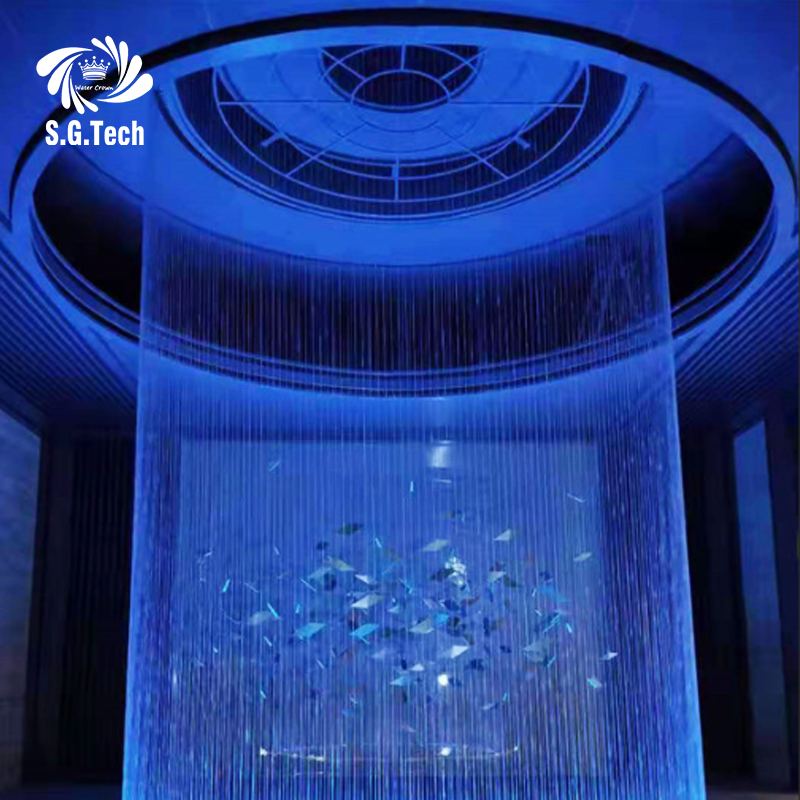
Why Digital Water Curtains Are Transforming Mall and Hotel Landscaping
Rising Demand for Immersive, Brand-Aligned Water Features in High-Traffic Interiors
Malls and hotels are increasingly adopting immersive water installations to strengthen brand identity and deepen visitor engagement. In high-traffic interiors—where space is premium and first impressions matter—digital water curtains stand out by transforming water into programmable media. Through precisely timed droplet release, they display logos, welcome messages, or seasonal animations, turning transitional zones like lobbies and corridors into dynamic branded experiences. This reflects a broader shift toward experiential marketing in commercial architecture: over 75% of luxury hospitality venues now prioritize interactive, sensor-aware installations. Site-specific designs account for local humidity, footfall density, and HVAC constraints—solving long-standing challenges like splash containment and maintenance access without sacrificing visual impact.
How Digital Water Curtains Uniquely Combine Aesthetics, Function, and Spatial Intelligence
These systems merge artistic expression with technical precision through three integrated capabilities:
- Dynamic Visual Control: Electromechanical valves enable pixel-perfect rendering of text, icons, and motion graphics
- Environmental Responsiveness: Climate-adaptive nozzles modulate flow rate and droplet size to stabilize ambient humidity and prevent condensation
- Space Optimization: Ceiling-integrated configurations occupy ≤20% of the footprint required by traditional fountains
Unlike static waterfalls, digital curtains serve dual functional roles—acting as real-time wayfinding tools while masking ambient noise. In hotels, animated directional paths guide guests to check-in; in malls, they highlight promotions or event schedules. Their cloud-updatable content engine supports rapid rebranding or seasonal pivots—critical for retail agility. Crucially, this spatial intelligence aligns with modern architectural priorities: aesthetics coexist seamlessly with HVAC efficiency, acoustic comfort, and safety compliance.
Key Selection Criteria for Commercial Digital Water Curtains
Indoor vs. Outdoor Deployment: Climate-Adaptive Nozzles and Environmental Resilience
Selecting the right system starts with environmental context. Indoor deployments require strict humidity control (targeting 45–55% RH) and stable temperatures above 10°C to avoid condensation on ceilings or adjacent finishes. Outdoor systems demand climate-resilient engineering: anti-clog nozzles, corrosion-resistant SUS316 stainless steel, and IP65+ rated enclosures. In freeze-prone climates, integrated heating elements prevent ice formation, while UV-stabilized components ensure performance under sustained sunlight. Wind calibration is essential—droplet trajectories must remain stable below 2.5 m/s gusts to preserve visual fidelity and prevent overspray.
| Factor | Indoor Requirements | Outdoor Requirements |
|---|---|---|
| Temperature | >10°C (no freezing risk) | Heating elements below 0°C |
| Humidity | <60% RH + HVAC coordination | Weatherproof enclosures (IP65+) |
| Materials | Standard stainless steel | UV-resistant SUS316 steel |
| Maintenance | Quarterly nozzle cleaning | Monthly debris removal |
Structural & Infrastructure Readiness: Drainage, Load Capacity, and HVAC Integration
Structural readiness is non-negotiable. Water reservoirs add ~900 kg/m²—requiring either reinforced slabs or engineered load-spreading frames. Drainage systems must handle peak flow rates of 5–8 L/min per nozzle bank; undersized piping risks flooding, stagnant water, and microbial growth per ASHRAE Guideline 12-2022. For indoor use, HVAC integration is critical: unmanaged moisture increases mold risk by 34% (ASHRAE 2023). Duct placement should support consistent 45–55% RH, and silent pumps (<45 dB) are mandatory near guest areas. Pre-installation laser scanning of ceilings and walls prevents conflicts with structural beams or electrical conduits. All installations must maintain ADA-compliant clearances—minimum 36-inch unobstructed path width around the curtain perimeter.
Customization and Dynamic Capabilities of Digital Water Curtains
Pixelated Flow Control for Real-Time Branding, Wayfinding, and Interactive Experiences
At their core, digital water curtains rely on electromagnetic valve arrays that release individual droplets with pixel-level timing and positioning—enabling high-resolution, real-time displays of text, logos, and fluid animations. Updated remotely via secure cloud software, content can shift instantly: from holiday-themed greetings in December to live occupancy indicators during conferences. Wayfinding applications include animated arrows, room identifiers, and multilingual signage—proven to reduce guest disorientation in complex hotel lobbies and multi-level malls. Integrated motion and sound sensors enable interactivity: approaching visitors trigger personalized greetings or ripple effects, increasing dwell time and emotional resonance. Curved or angled configurations adapt to architectural intent, while closed-loop recirculation maintains water efficiency—up to 90% reuse—without compromising resolution or responsiveness.
Compliance, Safety, and Architectural Integration Best Practices
Navigating Fire Codes, Egress Requirements, and Acoustic Considerations
Digital water curtains must integrate seamlessly with life-safety infrastructure—not compromise it. Per International Building Code (IBC) Section 1025, installations must never impede required egress widths (minimum 44 inches), nor interfere with sprinkler head coverage or fire alarm line-of-sight. Systems require automatic shutoff upon fire alarm activation, verified through UL-listed interface protocols. Drainage must eliminate slip hazards—especially on polished stone or terrazzo floors—using recessed grates with anti-vortex design. Acoustically, operational noise must remain ≤45 dB(A) in enclosed spaces to preserve ambient tranquility. In large atriums, vibration-dampening mounts and strategic baffling minimize sound transmission between levels. Early coordination with fire marshals, acoustic consultants, and building officials ensures compliance is embedded—not retrofitted—aligning aesthetic ambition with regulatory rigor and occupant safety.
FAQ
What are digital water curtains?
Digital water curtains are programmable installations that manipulate water with precision, allowing it to display logos, texts, and animations using electronically timed droplet releases.
Where are digital water curtains commonly used?
They are commonly used in malls, hotels, and other commercial spaces where they serve as both decorative and interactive elements conducive to branding and wayfinding.
What factors should be considered when selecting digital water curtains?
Key factors include indoor and outdoor deployment conditions, structural readiness, drainage, temperature, humidity control, and compliance with architectural and safety standards.
How do digital water curtains integrate into existing infrastructure?
They are designed to work within existing HVAC systems for humidity control and require clearances for safety and ADA compliance, as well as seamless integration with fire safety systems.
Can digital water curtains be customized for specific themes or promotions?
Yes, the content can be updated remotely to reflect different themes, seasonal events, or promotional branding efforts, offering dynamic flexibility.