
 EN
EN


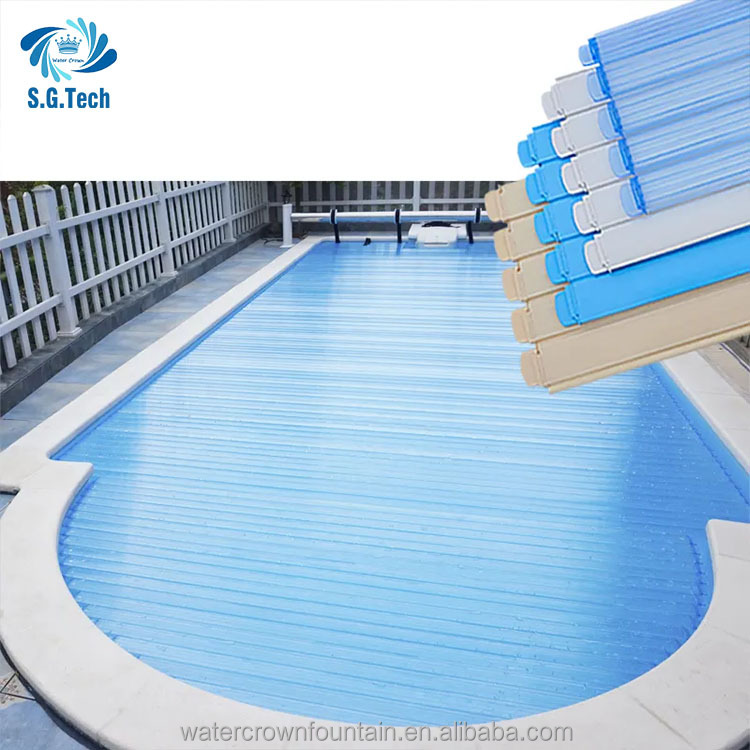
Enhanced Safety Through ASTM-Compliant Automatic Pool Cover Design
Physical Barrier Protection Against Drowning: Child and Pet Safety Validation
An automatic pool cover functions as a certified physical barrier when deployed—preventing unsupervised access to water and significantly reducing drowning risk. With drowning the leading cause of unintentional injury death for children aged 1–4 (CDC, 2023), ASTM F1346-23 compliance ensures these covers meet rigorous safety thresholds. Their tensioned fabric surface eliminates gaps where small bodies or pets could pass, while motorized operation guarantees consistent, sag-free deployment that maintains structural integrity over time.
Weight Load Testing and Structural Integrity per ASTM F1346-23 Standards
ASTM F1346-23 is the definitive U.S. standard for safety pool covers. It mandates that covers support a minimum static load of 485 lbs—equivalent to two adults and one child—without tearing, detaching from tracks, or allowing deformation that creates openings larger than 4 inches in diameter (the size of a toddler’s limb). Materials must also resist UV degradation, chlorine exposure, and repeated mechanical stress while maintaining tear strength exceeding 125 lbf per ASTM D2261. This testing confirms the cover serves as a true life-saving barrier—not just a convenience feature.
Energy Conservation with Automatic Pool Cover Deployment
Heat Retention Performance: Up to 70% Reduction in Overnight Heat Loss
Automatic pool covers dramatically improve thermal efficiency by reducing overnight heat loss by up to 70%, according to independent industry testing (2023). As uncovered pools lose 75% more heat for every 10°F ambient drop, the sealed insulation provided by a properly fitted cover minimizes reliance on heaters. The result is lower energy consumption, extended swimming seasons, and seasonal heating cost reductions of nearly 50%.
Evaporation Control and Its Ripple Effects on Water, Chemical, and Pump Usage
By suppressing evaporation by up to 90%, automatic covers trigger broad resource savings. Since evaporation accounts for approximately 70% of chemical depletion in residential pools (Water Quality Council, 2023), reduced moisture loss directly preserves sanitizer levels and lowers refill frequency. Less airborne debris entering the water also cuts pump runtime by up to 50%, decreasing electricity use and wear on filtration systems. A typical 20,000-gallon pool can save over 15,000 gallons of water and reduce chemical purchases by 35% annually.
Long-Term Cost Efficiency Driven by Automatic Pool Cover Automation
Automatic pool covers deliver measurable long-term financial returns by simultaneously optimizing three major operational costs: energy, water, and chemicals. Their continuous barrier reduces overnight heat loss by up to 70% and curbs evaporation by up to 95%. These dual conservation effects compound into significant downstream savings—fewer refills, less chemical reapplication, reduced heater cycling, and lower pump demand. Debris exclusion further extends equipment life, decreasing maintenance frequency and filter replacement costs. Collectively, these efficiencies typically allow the system to recoup its initial investment within 3–5 years—transforming upfront cost into sustained, verifiable ROI.
Installation, Maintenance, and Real-World Adoption of Automatic Pool Covers
Residential Integration Challenges and Best Practices for Seamless Operation
Integrating automatic pool covers into existing residential settings often requires careful planning—especially for irregularly shaped or freeform pools, where custom track systems are frequently necessary. Over 92% of retrofit installations involve structural modifications to accommodate housing units and ensure precise track alignment. Best practices include conducting a comprehensive site evaluation before any work begins and selecting reinforced hardware for non-rectangular designs, which endure roughly 30% higher mechanical stress. Partnering with certified installers trained in hydraulic calibration and safety sensor integration is essential: improper installation voids 78% of manufacturer warranties, per industry compliance data.
Lifecycle Maintenance Tips to Maximize ROI and System Longevity
Proactive, scheduled maintenance extends automatic pool cover service life by 7–10 years and sustains over 95% of its original energy-saving performance. Follow these evidence-based protocols:
- Bi-weekly debris removal from tracks using soft brushes to prevent motor overload
- Quarterly lubrication of bearings and rollers with NSF-certified silicone compounds
- Annual tension calibration to uphold ASTM F1346-23 weight distribution requirements
- Biannual professional inspections to identify early signs of UV fabric degradation or track misalignment
Consistent upkeep reduces annual operational costs by 22%—primarily through preserved chemical stability and minimized pump runtime. Fabric replacement every 8–12 years (depending on sun exposure and climate) represents a $1,200 investment that helps avoid $4,000+ in structural repairs caused by long-term strain or material failure.
FAQ
What is ASTM F1346-23 compliance?
ASTM F1346-23 compliance ensures that the automatic pool covers meet strict safety standards by supporting a specified static load, maintaining their integrity under stress, and resisting environmental factors such as UV exposure and chlorine.
How do automatic pool covers conserve energy?
Automatic pool covers reduce energy consumption by significantly decreasing overnight heat loss and suppressing evaporation, which allows pools to retain heat and maintain water levels without requiring excessive use of heaters.
What long-term financial benefits can automatic pool covers offer?
Automatic pool covers optimize operational costs for energy, water, and chemicals, leading to substantial savings. These savings can result in recouping the initial investment cost within 3–5 years, providing ongoing financial benefits.
What are the best practices for maintaining automatic pool covers?
Best practices for maintaining automatic pool covers include bi-weekly debris removal, quarterly lubrication, annual tension calibration, and biannual professional inspections to ensure the system's longevity and efficiency.