
 EN
EN


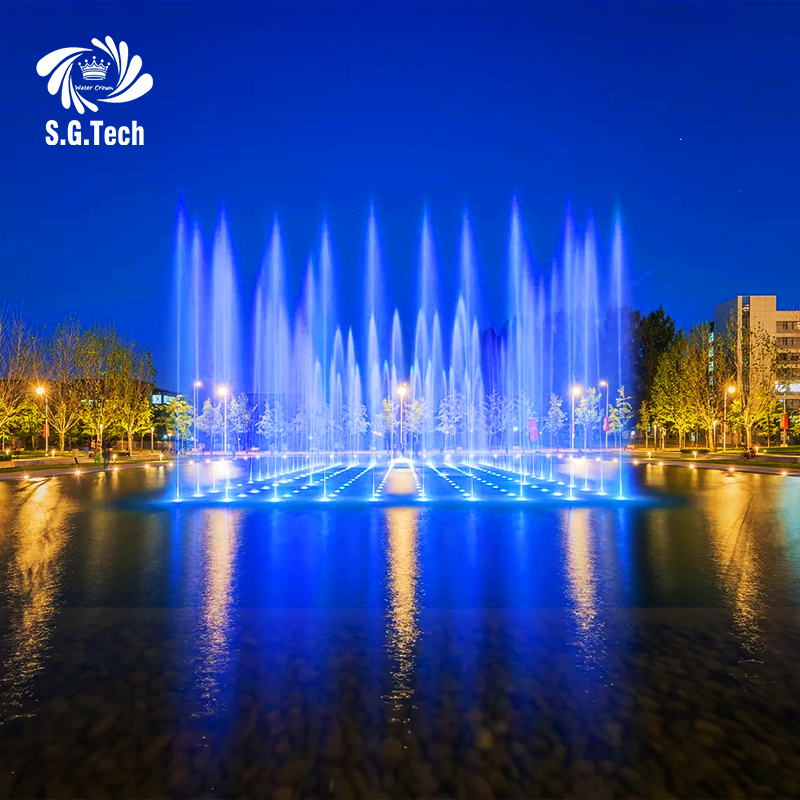
Defining Scale and Proportion for Large-Scale Custom Fountain Impact
Why Visual Legibility Demands Intentional Scale in Open Civic Spaces
In vast civic spaces like parks and squares, a custom fountain must command attention without overwhelming its surroundings. Research shows visual legibility fails when features occupy under 5% of sightlines in expansive areas (Urban Design Journal, 2023). For example, a 20-foot fountain becomes visually “lost” in a 100-yard plaza, while one exceeding 40% of the space dominates aggressively. Strategic scaling considers sight angles: at 200 feet, a 15-foot minimum height maintains clarity. This intentional approach ensures the water feature serves as a cohesive focal point rather than decorative clutter, harmonizing with pedestrian flow and architectural sightlines.
Proven Height-to-Width Ratios for Dominant Yet Contextually Harmonious Custom Fountain Design
Landscape architects employ golden-ratio principles (1:1.6) to balance fountain prominence with environmental integration. Data from 120 public installations reveals optimal impact when height equals 30–40% of the basin width—e.g., a 12-foot structure pairs with a 30–40-foot basin. This creates hydraulic drama while preventing splash-zone overreach. For linear plazas, a 1:4 height-to-space-width ratio maintains visibility without obstruction. Crucially, vertical elements should align with nearby structures; a fountain mirroring 60% of adjacent building heights achieves contextual unity. Such ratios transform standalone custom fountains into organic extensions of the landscape.
Material Selection: Balancing Durability, Aesthetics, and Climate Resilience for Custom Fountain Installations
Cast Stone, Stainless Steel, and Bronze Compared: Performance Data Across Urban Microclimates
Selecting materials for large-scale custom fountains requires evaluating performance across diverse urban environments. Cast stone offers classical aesthetics but shows vulnerability in freeze-thaw cycles, with unsealed installations experiencing crack rates up to 30% in northern climates. Stainless steel demonstrates exceptional corrosion resistance, maintaining structural integrity for 50+ years in coastal zones with high salt exposure. Bronze develops a self-protecting patina over 5–7 years, making it ideal for historic districts—though initial costs run 40% higher than alternatives. In arid regions, all three materials perform well, but bronze requires bi-annual cleaning to prevent mineral discoloration.
Maintenance Realities: Corrosion Resistance, Surface Longevity, and Cleaning Frequency by Material
Long-term upkeep varies dramatically by material. Stainless steel demands minimal maintenance—annual power washing suffices even in corrosive marine environments due to its <0.1 mm/decade corrosion rate. Bronze’s patina eliminates the need for protective coatings but requires semi-annual inspections to ensure even oxidation. Cast stone requires the most intensive care: quarterly pressure-washing to prevent algae buildup and biennial sealing to avoid efflorescence in humid climates. Surface longevity spans 50 years (stainless steel) to over a century (bronze), with cast stone lasting 25–40 years depending on climate severity and maintenance rigor.
Contextual Integration: Aligning Custom Fountain Design with Landscape Architecture and Public Experience
Site Context Mapping: Synchronizing Water Massing, Cultural Sightlines, and Pedestrian Movement
Effective custom fountain installations require meticulous site analysis to harmonize water dynamics with spatial and social factors. Water massing—the volumetric relationship between spray patterns and basin size—must align with sightlines to cultural landmarks, ensuring visual prominence without overwhelming adjacent architecture. Simultaneously, designers map pedestrian flow patterns to position fountains where water sounds enhance ambiance while avoiding congestion points. This tripartite synchronization (hydraulic scale + cultural visibility + movement ecology) transforms standalone structures into integrated public assets. For example, fountains near major pathways leverage water’s reflective properties to amplify daylight visibility, while evening programming uses laminar flows for quiet acoustics in meditation zones. Such intentional placement respects existing topography and view corridors, turning water features into intuitive navigational anchors within civic spaces.
Strategic Placement for Visibility, Functionality, and Urban Resilience
Optimal placement transforms a custom fountain from mere ornamentation into a functional landmark that withstands urban challenges. Positioned at key decision points—such as plaza entrances, pathway intersections, and gathering zones—the installation becomes naturally visible without obstructing pedestrian flow. This strategic approach considers sightlines from multiple vantage points: eye-level visibility for immediate engagement (5–6 feet height ideal), mid-distance recognition from main thoroughfares, and long-range silhouetting against architectural backdrops. Functionality extends beyond aesthetics; placement must accommodate maintenance access, integrate with drainage infrastructure, and avoid frost-prone low-lying areas that compromise winter resilience. Crucially, positioning should leverage natural wind patterns to minimize water drift while enhancing evaporative cooling effects in summer—a proven method reducing ambient temperatures by 5–8°F in civic spaces. When aligned with traffic analysis and microclimate data, the custom fountain becomes a durable focal point that adapts to urban stressors while sustaining community interaction.
FAQ Section
-
What is the ideal scale for a custom fountain in large open spaces?
Strategic scaling ensures the fountain occupies at least 5% of sightlines to maintain visual legibility without overwhelming its surroundings. For example, at 200 feet, a minimum height of 15 feet ensures clarity. -
Which materials are best for custom fountain installations in extreme climates?
Stainless steel offers exceptional corrosion resistance in marine environments, while bronze develops a protective patina ideal for historic areas. Cast stone is vulnerable in freeze-thaw cycles but works well in arid zones. -
How do you align fountain placement with pedestrian flow?
Analyzing pedestrian movement patterns allows for intentional placement where fountains enhance ambiance, avoid congestion, and become intuitive navigational anchors. -
What is the typical lifespan of materials used in custom fountains?
Stainless steel lasts over 50 years, bronze can exceed a century with proper care, while cast stone lasts 25–40 years depending on climate and maintenance. -
How can custom fountains contribute to urban cooling?
Strategic placement leveraging natural wind patterns enhances evaporative cooling effects, reducing ambient temperatures by 5–8°F in civic spaces.