
 EN
EN


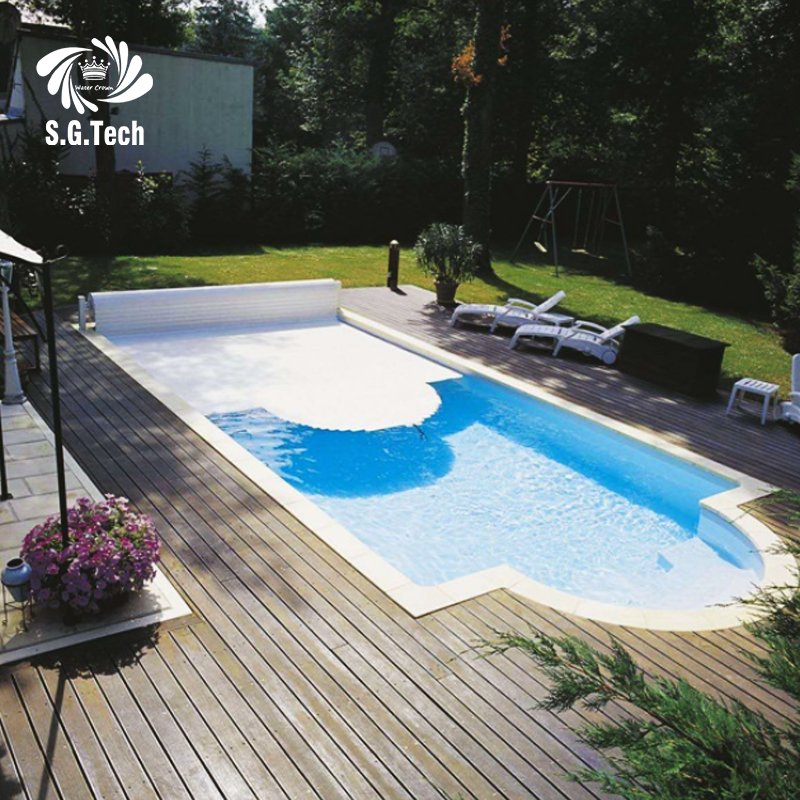
Why Standard Pool Covers Fail — And Why Custom Pool Cover Fit Is Non-Negotiable
The Geometry Gap: How Irregular, Freeform, and Multi-Zone Pools Defy Off-the-Shelf Dimensions
Most pools aren’t simple rectangles—over 65% feature irregular shapes, curved edges, or integrated spas. Standard covers force-fit these complex contours, leaving gaps where debris enters and water evaporates. Kidney-shaped pools with varying depths and freeform designs with coves demand millimeter-precise tensioning impossible with mass-produced solutions. When covers stretch over angled walls or tight corners, premature tearing occurs at stress points. Only custom pool cover fabrication accounts for every radius and angle, using digital scanning to replicate unique geometries that off-the-shelf products can’t address.
Safety & Compliance Risks: ASTM F1346-22 Violations from Poor Fit and Gaps
Gaps exceeding 4.5 inches between cover and pool edge violate ASTM F1346-22 safety standards—a critical threshold where entrapment risks multiply. Ill-fitting covers create dangerous pockets where children or pets can become trapped underwater, with non-compliant installations contributing to nearly 20% of pool accidents according to safety audits. Beyond immediate hazards, poor fit invalidates insurance coverage and exposes owners to liability. Custom tension-calibrated edges maintain uniform contact with coping stones and decking, ensuring no space exceeds regulated limits while supporting required weight loads. This precision transforms covers from mere accessories into non-negotiable safety systems.
How Custom Pool Cover Fabrication Ensures Precision Fit — From Measurement to Manufacture
Digital Measurement Evolution: From Tape Measures to AI-Powered Drone Scanning and 3D-BIM Templates
Traditional manual measurements often resulted in 15–20% fitting inaccuracies for complex pool shapes. Modern fabrication now integrates drone photogrammetry to capture sub-millimeter topographic details of freeform contours, AI-assisted analysis to identify structural nuances like vanishing edges or integrated spas, and 3D-BIM modeling to generate digital twins for exact material calculations. This shift eliminates measurement errors exceeding 4 inches, ensuring covers conform precisely to each pool’s unique geometry.
Geometry-Driven Production: CNC-Cut Vinyl, Laser-Guided Seaming, and Tension-Calibrated Edging
Precision measurements translate directly into manufacturing through three core techniques:
| Process | Function | Accuracy Gain vs. Manual |
|---|---|---|
| CNC vinyl cutting | Matches exact pool perimeter | ±0.1" tolerance |
| Laser-guided seaming | Aligns panels along complex curves | 98% seam precision |
| Tension-calibrated edging | Maintains ASTM F1346-22 safety tension | Consistent 1,100-lb load capacity |
Together, these methods deliver zero-gap seals—essential for preventing debris intrusion and eliminating accidental submersion risks.
Choosing the Right Custom Pool Cover System for Your Pool’s Shape and Installation Context
Track-Based vs. Trackless Systems: Matching Mechanism Design to Rectangular, Oval, Round, and Freeform Contours
Track-based systems use recessed rails to guide the cover and are ideal for rectangular and oval pools, where straight edges ensure smooth operation and reduce wear. Round pools benefit from curved track designs that maintain even tension. In contrast, freeform pools require trackless systems with tension-calibrated edges—these use weighted mechanisms to contour irregular shapes like kidney or L-shaped designs without gaps. Selecting the right system prevents water contamination and reduces replacement costs by 30% over five years. For geometric pools, track systems offer faster deployment; for freeforms, trackless approaches provide essential flexibility.
Retrofit Readiness: Recessed Top Track, Undertrack, and Hybrid Mounts for Existing Decks and Landscapes
Existing pools need solutions that preserve deck integrity. Recessed top track mounts embed into concrete surfaces, creating seamless transitions ideal for modern patios. Undertrack systems install beneath stone or wood decking, hiding components completely. Hybrid mounts combine both approaches, adapting to multi-level landscapes with stepped transitions. Each option maintains ASTM F1346-22 safety compliance by eliminating trip hazards. Professional measurement ensures precise fitment—critical for complex retrofits where improper installation can increase labor costs by 45%. Custom pool cover integration protects your investment without requiring landscape reconstruction.
FAQ
Why do standard pool covers fail for freeform or irregularly shaped pools?
Standard pool covers often fail because they cannot accommodate the unique geometries of irregular or freeform pools. This results in gaps where debris can enter and water evaporates, as well as increased wear and tear at stress points.
How does custom pool cover fabrication improve safety?
Custom pool covers adhere to ASTM F1346-22 safety standards by eliminating gaps that can pose entrapment risks. They also ensure uniform contact with pool edges, mitigating accidents and liability concerns.
What are the advantages of digital measurement technologies for custom pool covers?
Digital measurement technologies such as drone photogrammetry and AI-assisted analysis provide precise measurements, eliminating errors that often occur with manual methods. This ensures a perfect fit for complex pool shapes.
What types of pool cover systems work best for specific pool shapes?
Track-based systems are ideal for rectangular and oval pools, while trackless systems are better suited for freeform pools. Selecting the correct system ensures proper tension and prolongs the cover’s lifespan.
Are custom pool covers compatible with existing pool landscapes?
Yes, custom pool covers can integrate seamlessly into existing decks and landscapes using recessed top tracks, undertrack systems, or hybrid mounts. These options preserve deck integrity while ensuring safety compliance.
Table of Contents
- Why Standard Pool Covers Fail — And Why Custom Pool Cover Fit Is Non-Negotiable
- How Custom Pool Cover Fabrication Ensures Precision Fit — From Measurement to Manufacture
- Choosing the Right Custom Pool Cover System for Your Pool’s Shape and Installation Context
-
FAQ
- Why do standard pool covers fail for freeform or irregularly shaped pools?
- How does custom pool cover fabrication improve safety?
- What are the advantages of digital measurement technologies for custom pool covers?
- What types of pool cover systems work best for specific pool shapes?
- Are custom pool covers compatible with existing pool landscapes?