
 EN
EN


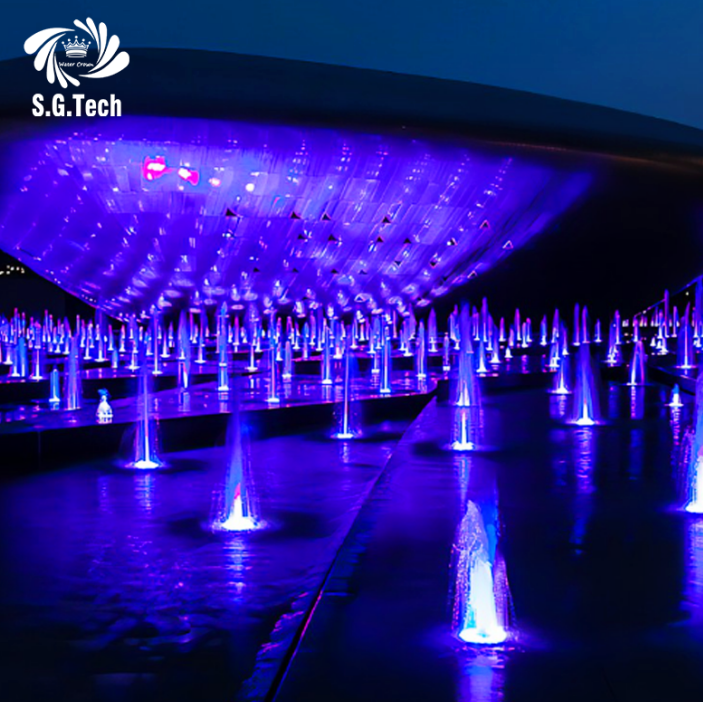
Core Components and Technical Foundations of a Music Fountain
At the core of every commercial music fountain lies a sophisticated integration of hydraulic, lighting, and control technologies—transforming water and light into precisely choreographed performances synchronized with audio tracks.
Pumps, Nozzles, LED Lights, and Control Systems Explained
Water moves through special nozzles thanks to high pressure pumps, creating beautiful arcs, powerful geysers, or delicate mist curtains. The LED lighting system saves energy while changing colors dynamically. Most setups have a central control system usually based on something called a PLC along with frequency converters. These components work together to adjust how fast the pumps run and where valves open up, all happening almost instantly. For those who want really precise water effects, this level of control matters a lot. When it comes to lighting, DMX protocols help match colors and brightness levels to the music being played. This synchronization creates visuals that tell stories as effectively as any good performance.
How Music Synchronization Drives Water Choreography
The synchronization software looks at audio tracks, checking out things like rhythm, pitch levels, and how loud different parts get, then turns all that info into commands for the hydraulic systems and lights. When there's a big build-up in the music, it makes those water jets shoot way up high while the lights go full blast too. But when the music gets quieter, everything changes again - the water moves more smoothly and the lighting becomes more subtle and gentle across the space. Getting good timing is really important here because if the system has lag, the whole experience falls apart. People want everything to match up perfectly between what they hear, see moving through the air, and feel happening around them.
Key Selection Criteria for Commercial Music Fountains
Site-Specific Fit: Scale, Basin Design, and Urban Infrastructure
When choosing a commercial music fountain, start by thoroughly checking out the location first. The size really matters depending on what people will see: big open spaces need water jets going over 15 meters high, while smaller areas like enclosed courtyards work fine with water arcs around 5 to maybe 8 meters tall. Make sure the basin is deep enough, at least 1.5 meters or so, because that supports the powerful hydraulics system and stops water from splashing everywhere. Don't forget to check underground pipes and drains too. Wind is another factor worth considering, especially if there are regular strong breezes blowing through the area. Some installations even include automatic wind sensors that tweak the spray direction as conditions change. And for electricity, the setup needs reliable three-phase power supply. All those electrical connections in damp areas should be protected with proper waterproof conduits rated IP68 standard to keep everything running smoothly.
Brand Alignment, Customization Options, and Long-Term Maintainability
The design of a music fountain needs to match the character of its location. High-end hotels typically go for those smooth flowing water columns paired with classical music arrangements, whereas amusement parks go all out with explosive water jets and flashing colored lights that sync with popular songs. The good news is that modern systems come with modular nozzles and advanced lighting setups which means changing shows seasonally doesn't require tearing everything apart and starting fresh. When it comes to lasting performance, nothing beats marine-grade stainless steel parts when dealing with constant chlorine exposure from pool water. Switching to variable frequency drive pumps saves around 30% on electricity bills compared to older fixed-speed models. And let's not forget about smart control panels that warn operators about problems before they happen, cutting down unexpected shutdowns by roughly 40% according to industry reports.
Design Integration and Audience Impact Strategy
Good design makes a music fountain much more than just another attraction in a space. When the water show matches up with nearby buildings or supports the overall vibe of a place - think blue tones for tech parks, warm amber for hotels and restaurants - people actually connect with it on an emotional level. Putting these installations where folks tend to hang out or walk through naturally can boost how long they stay around by about 30% according to research done by urban planners. What we get is something that hits all the senses at once: music, lights dancing across the water, and the actual movement of the fountains themselves. People remember these experiences and share them online too, which means they come back again and again. Want proof? Look at foot traffic patterns using things like heat maps or check how many devices connect to local Wi-Fi networks while also seeing what sells better in shops nearby. This gives real numbers showing how beautiful designs translate into actual business benefits.
Measuring ROI: Foot Traffic, Dwell Time, and Revenue Uplift from Music Fountains
Quantifying Commercial Value Through Behavioral Metrics
The real money-making potential of a music fountain can be seen in three main ways people interact with these installations: how many folks walk by, how long they stick around, and whether nearby businesses actually make more cash. To get this info, places often use infrared counters plus Wi-Fi tracking that doesn't reveal personal details to count visitors. They also look at thermal maps showing where crowds gather and conduct short exit interviews to gauge interest levels. For actual financial impact, stores compare their point-of-sale numbers before and after fountain installation. According to recent studies from the Urban Placemaking Report released last year, shopping areas featuring synchronized water shows tend to boost retail sales by about 12 to 18 percent for shops located within 50 meters of the fountain location.
| Metric | Measurement Method | Commercial Impact |
|---|---|---|
| Foot Traffic | Infrared counters, Wi-Fi tracking | Quantifies audience reach |
| Dwell Time | Heat mapping, exit surveys | Predicts spending likelihood |
| Revenue Uplift | POS data comparison | Direct ROI calculation |
Real-World Case Study: 27% Revenue Increase in Mall Plaza
One shopping mall in the Midwest decided to install a 24 nozzle musical water feature right in the heart of their courtyard area. The show runs on a schedule that matches up with most stores' evening hours. After about eight months, they noticed something interesting through those fancy infrared sensors they had set up. People were sticking around for roughly 22 extra minutes whenever the fountain was going full blast. Looking at point of sale records told another story altogether. Stores situated within 50 meters saw their sales jump by 27%, while shops further away only managed gains of around 8%. So what does all this mean? Well, these water displays aren't just pretty to look at anymore. When placed thoughtfully in commercial spaces, they actually bring people in, keep them there longer, and ultimately lead to more spending. The numbers don't lie, even if they do come with some pretty impressive decimal points.