
 EN
EN


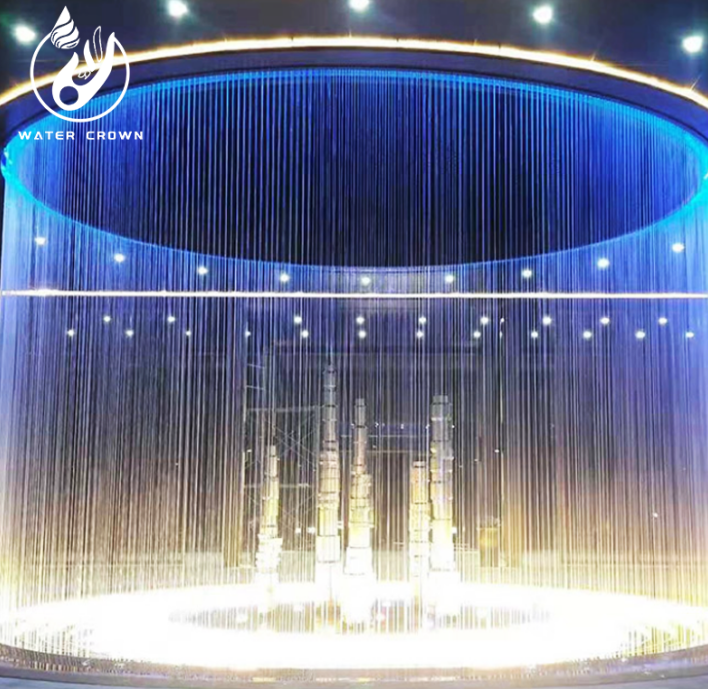
How Water Curtain Systems Enhance Exhibition Center Environments
Regulating microclimate and improving air quality in high-traffic exhibition spaces
Water curtain systems help control the climate inside exhibition halls by boosting humidity levels when it gets too dry outside, while cutting down on floating particles by around 40% in areas where lots of people gather. The cooling happens through evaporation, which fights against the heat generated by all those lights and bodies packed into one space. This keeps everyone comfortable without putting extra strain on regular heating and cooling equipment. Plus, the water that falls down these systems grabs hold of dust and allergens too something that matters a lot since about seven out of ten event spaces get complaints about bad air quality during busy times.
Enhancing spatial perception and visitor experience with visual fluidity
Kinetic installations are changing how exhibitions look and feel, replacing traditional walls with flowing water features that let spaces breathe. Instead of hard barriers between displays, these water curtains help direct people naturally around the venue while keeping views open across large areas, which matters a lot when navigating spaces over 10 thousand square meters. The gentle movement of water also makes crowded spots feel less packed, according to research indicating folks tend to stay 35% longer near exhibits surrounded by these waterfall screens. Plus, brands can project their logos and designs onto the moving water surfaces without blocking important sight lines or making it harder for visitors to find their way around the space.
Key Design Considerations for Custom Water Curtains in Exhibition Centers
Designing custom water curtains for exhibition centers requires harmonizing technical precision with artistic vision. Three critical factors determine success: structural integrity, aesthetic flexibility, and layout dynamics.
Structural integration: Adapting to ceiling height, HVAC systems, and fire safety codes (NFPA 13/75)
Getting things installed right really depends on how well it fits into whatever building structure we're working with. When ceilings get tall, say over 8 meters high, the way those water droplets fall changes completely. That's why most projects at that height need special pumps just to keep everything flowing properly. We also have to think about how this interacts with whatever HVAC system is already there. Mixing these systems helps avoid problems with too much moisture hanging around. Proper air movement actually cuts down on condensation issues by about 60% in places where temperature control matters most. Fire safety regulations from NFPA 13 and 75 are pretty strict too. Every design needs those automatic shut off valves and frames made from materials that won't catch fire easily. Top facilities nowadays often install pressure sensors as well. These stop water from flowing within two seconds once a fire alarm goes off, which makes a big difference when seconds count during emergencies.
Aesthetic customization: LED synchronization, transparency levels, and branded framing solutions
The visual appeal really depends on what can be customized. Water walls equipped with programmable LEDs turn into amazing display surfaces when paired with projection systems, creating those eye-catching brand experiences people remember. Adjusting transparency from around 30% all the way up to 90% works through changing how big the water droplets are. When we get down to about 0.8mm in size, text becomes much clearer on these displays. The framing itself often includes subtle branding touches too, such as laser cut logos built right into stainless steel components. This approach manages to satisfy marketing goals without going overboard aesthetically. Take one large exhibition hall in Germany for instance. They installed light sensors throughout their space so the LED brightness automatically adapts depending on how bright it gets during the day. Not only does this make everything easier to see, but they've managed to slash their electricity costs by roughly 40% according to their reports.
Static vs. dynamic layouts: Performance and spatial impact in open-plan exhibition halls
How we arrange spaces has a big impact on how people experience them visually. Static setups work great along walls and edges where they form solid boundaries that cut down noise levels around 15 decibels according to research from the Acoustical Society back in 2023. On the flip side, those fancy dynamic setups with adjustable nozzles let architects create changing displays right in the middle areas of buildings, which helps manage crowds when places get busy. Tests done in wind tunnels show retractable structures can handle winds blowing at about 8 meters per second near doorways, so water doesn't spray everywhere unexpectedly. We're starting to see combinations appear too, mixing permanent parts with movable components running on tracks, giving building managers options to rearrange spaces as needed without major renovations.
Performance Metrics and Real-World Applications in Leading Exhibition Centers
Case study: 12-meter-wide custom water curtain at Shanghai New International Expo Centre (2023 retrofit)
In 2023, workers retrofitted the Shanghai New International Expo Centre with some pretty cool water features that really changed how visitors experienced the space. They installed something massive - about 12 meters wide - which actually lowered the temperature around it by about 3 to 5 degrees Celsius while keeping humidity levels at around 65%. That was super important because many of the exhibits there are quite delicate and need specific conditions to stay intact. People started hanging out longer near these displays too. Around 40% more time spent in those areas according to tracking data, and when they asked folks afterward, roughly three quarters mentioned the water curtain as something they remembered most from their visit. Getting all this working properly meant carefully connecting everything to the building's existing heating and cooling systems so that excess moisture wouldn't damage any electronic equipment sitting nearby.
Key performance data: Flow rate, droplet uniformity, and wind resistance in real-world conditions
Operational reliability in high-traffic venues demands rigorous performance validation. Field measurements from operational installations reveal critical benchmarks:
| Metric | Target Specification | Real-World Performance | Impact Factor |
|---|---|---|---|
| Flow Rate | 120 L/min | 115–125 L/min | Humidity control stability |
| Droplet Uniformity | ±1.2mm variance | 0.8–1.1mm variance | Visual consistency |
| Wind Resistance | 15 m/s gusts | Stable at 18 m/s | Spatial safety compliance |
The numbers really matter when it comes to exhibition spaces because crowds just don't move predictably there, creating all sorts of tiny air currents. When we talk about droplet distribution, what matters most is how evenly those particles spread out. We check this with lasers that scan through the mist, making sure everything reflects light consistently so brand logos and other projections look sharp and clear across the whole display area. For wind tests, we actually bring in big industrial fans to mimic what happens when people walk around and stir up air movement. The results? Structures held up fine even when pushed beyond their normal limits by about 20%, which means no worries about water splashing onto expensive exhibits nearby.