
 EN
EN


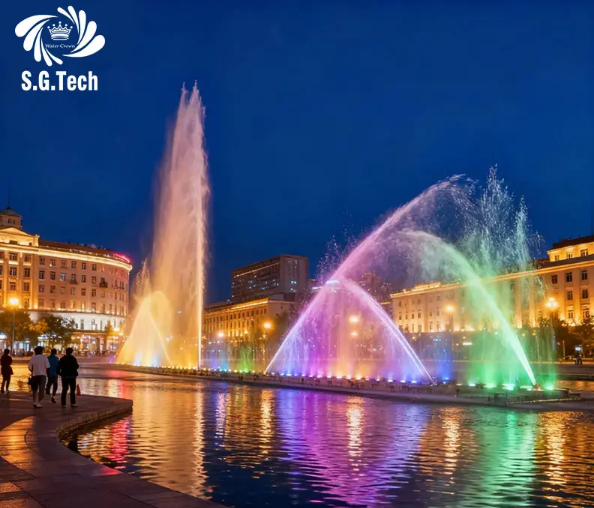
What Makes Interactive Fountains Different from Decorative Ones
The gap between a decorative fountain and a custom interactive fountain isn't just aesthetic. Decorative fountains keep water in a contained visual circuit with no direct human contact. Interactive splash pads and ground-level jets are designed for physical engagement, which creates an entirely different set of water safety requirements.
Children playing in these features ingest water, splash it into eyes and open mouths, and stay in prolonged contact with treated surfaces. This changes the hygiene baseline from aesthetic water quality to public health water quality. The relevant benchmarks here aren't general fountain maintenance guidelines; they come from public wading pool and spray ground standards published by organizations like the Centers for Disease Control and Prevention (CDC) and standards bodies such as NSF International.
Understanding the Recirculating System That Powers the Feature
Most ground-level interactive fountains operate on a closed recirculating loop rather than a single-pass freshwater supply. Water is collected in a surge tank or underground basin, filtered, dosed with disinfectant, and pumped back up through the jet nozzles. The design of this recirculating system is where water quality is actually controlled, not at the nozzle level.
Key system components that affect water quality include:
1.Filtration type and flow rate (sand, cartridge, or DE filter, sized for the feature's total water volume)
2.Disinfection method (chlorine, UV, ozone, or a combination)
3.Surge tank sizing relative to peak bather load
4.Automatic chemical dosing and monitoring
A project involving a splash pad installation at a public square in the Middle East brought this into sharp relief. The design team initially specified a flow rate that matched the fountain's aesthetic nozzle output but undersized the filtration capacity relative to expected daily user volume. During peak summer use with 80 to 100 children per session, fecal coliform counts in the recirculating water exceeded safe thresholds within three hours of opening. Correcting the issue required upsizing the filter, adding UV disinfection as a secondary treatment layer, and installing a continuous ORP sensor to monitor real-time oxidation-reduction potential.
Disinfection Chemistry in High-Bather-Load Conditions
Chlorine remains the most widely used disinfectant in interactive water features, but its behavior changes dramatically under high bather load. Bathers introduce nitrogen-containing compounds, primarily urine and sweat, which react with free chlorine to form combined chlorine species like chloramines. These reduce the effective disinfection capacity of the water while simultaneously irritating skin and eyes.
| Disinfection Approach | Effectiveness vs. Pathogens | Chloramine Formation Risk | Installation Complexity | Ongoing Cost |
|---|---|---|---|---|
| Free chlorine only | High | High under bather load | Low | Low |
| Chlorine + UV | Very High | Low | Medium | Medium |
| Chlorine + Ozone | Very High | Very Low | High | Medium-High |
| Salt chlorination | High | Moderate | Medium | Low |
The CDC's Healthy Swimming guidelines recommend maintaining free chlorine at 1-3 ppm for interactive spray features, with a target pH between 7.2 and 7.8. Monitoring should happen at least every two hours during operation, not once daily.
Nozzle and Surface Hygiene Beyond the Water Column
Water quality isn't only a chemistry problem. Biofilm buildup on nozzle interiors, basin walls, and underground pipe runs creates a reservoir for Legionella, Pseudomonas, and other opportunistic pathogens that chlorine alone can't reliably penetrate once biofilm matrix has formed.
Effective biofilm management requires designing for cleanability: smooth, non-porous surface materials for the basin and channel; accessible cleanout ports at pipe low points; and a regular shock treatment protocol during low-use or overnight shutdown periods. Feature shutdowns longer than 72 hours should trigger a full system flush before reopening.
Regulatory Compliance and Testing Frequency
NSF/ANSI Standard 50 covers equipment for swimming pools and spas, and many jurisdictions apply its requirements to spray grounds by extension. ANSI/APSP-11 provides specific guidance on interactive water features. Local health department requirements vary, but the baseline for publicly accessible interactive fountains typically includes:
1.Licensed operator sign-off on water quality records
2.Microbiological testing at established intervals
3.Documented emergency closure procedures for contamination events
4.Visible water quality posting requirements at the feature
Designing Water Quality Into the Feature from the Start
Retrofitting water quality infrastructure into a poorly designed fountain is expensive and often incomplete. The most reliable approach integrates the treatment system into the feature design from the first engineering pass.
That means sizing the recirculation tank for actual anticipated bather loads rather than minimum functional requirements, specifying chemical-resistant materials for all wetted surfaces, and including automation hardware for continuous pH and ORP monitoring with automatic shutdown triggers if parameters fall out of range.
Water Crown builds custom interactive fountains with the recirculation and treatment infrastructure engineered as part of the complete system package, not as an afterthought, drawing on direct project experience across commercial and public installation contexts.
Table of Contents
- What Makes Interactive Fountains Different from Decorative Ones
- Understanding the Recirculating System That Powers the Feature
- Disinfection Chemistry in High-Bather-Load Conditions
- Nozzle and Surface Hygiene Beyond the Water Column
- Regulatory Compliance and Testing Frequency
- Designing Water Quality Into the Feature from the Start