
 EN
EN


What Is a Digital Water Curtain and How Does It Work?
Core Principle: Projection onto Controlled Water Droplets
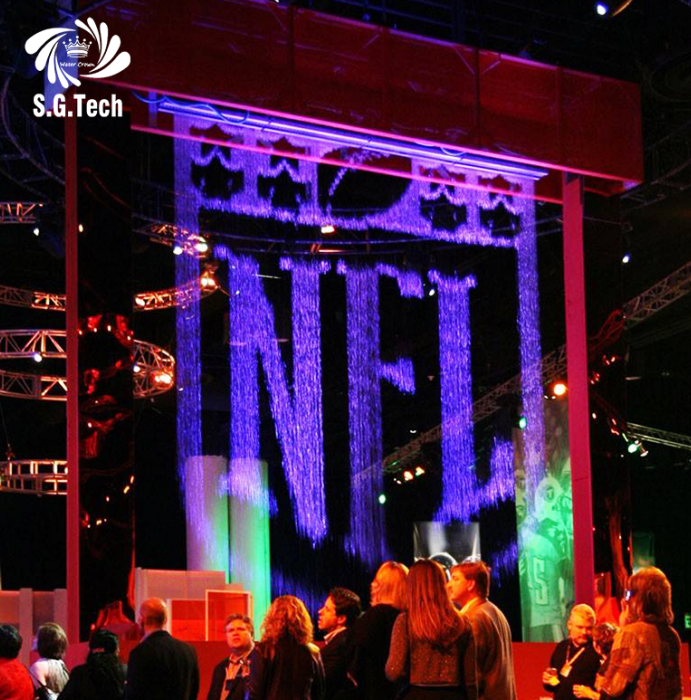
Digital water curtains turn ordinary falling water into stunning visual displays by showing images or moving pictures on carefully timed water droplets. The system works through computer controlled valves that release water in patterns similar to pixels, basically creating a temporary screen in the air. Special software controls when each drop falls so it can show readable words, company logos, or smooth flowing animations. Bright LED lights make sure colors stand out clearly even during the day. Some installations also have motion detectors or proximity sensors that let people interact with the display as they walk by, which makes this tech really interesting for places where art meets buildings and commercial spaces.
Key Components: Solenoid Valves, Precision Nozzles, and Real-Time Control Systems
Three integrated systems form the operational backbone:
- Solenoid valves: Electromagnetic actuators with sub-10ms response times generate discrete water "pixels" on demand.
- Laser-cut nozzles: Engineered for ±0.1mm dimensional consistency, they produce uniform, laminar streams critical for image fidelity.
-
Real-time controllers: Industrial-grade processors (e.g., Beckhoff or Siemens PLCs) synchronize valve actuation, LED output, and media playback—often integrating with DMX, MIDI, or show-control software.
Water recirculation is central to efficiency: closed-loop systems filter and reuse over 95% of water, minimizing waste and enabling sustainable operation in both commercial and public settings.
Matching Your Space to Digital Water Curtain Requirements
Indoor vs. Outdoor Deployment: Environmental Factors and Structural Constraints
The environment plays a big role in how we approach design specs. When setting things up outside, wind is always a concern. Wind gusts over 15 miles per hour can really mess with projection quality, sometimes cutting clarity down by as much as 40%. Temperature swings also matter a lot. Cold places need glycol based antifreeze solutions while areas with lots of sun exposure demand materials that resist UV damage. Inside spaces have different challenges mainly around humidity control. Moisture buildup near electronic components raises the chance of failures by about a quarter if there's no proper ventilation or sealed enclosures to keep things dry. From a structural standpoint, outdoor equipment needs solid reinforcement. Most setups require mounts capable of handling at least 200 kilograms and are typically anchored into concrete foundations. Indoor installations tend to go for lighter weight aluminum frames instead. These usually come with built in drip trays and leave about 15 centimeters of space for maintenance access. For exterior products, meeting IP68 protection standards is non negotiable. Interior units located near heating systems should at minimum comply with NEMA 4X specifications or similar standards that protect against moisture intrusion.
Sizing, Flow Rate, and Mounting Options for Seamless Integration
Successful integration hinges on three calibrated parameters:
- Sizing: Standard widths range from 2–8 meters. Height-to-width ratios exceeding 3:1 destabilize droplet coherence—limiting practical height to ~24 meters for an 8m-wide curtain.
- Flow Rate: 20–30 L/min per nozzle delivers optimal droplet density and projection surface continuity. Lower flows fragment imagery; higher rates increase splashback and pump strain.
- Mounting: Wall-mounted configurations suit lobbies and façades (with service access), while ceiling-suspended systems—common in atriums—require structural steel supports rated for dynamic water loads. Recirculating basins must hold ≥150% of total system volume to prevent pump cavitation; modular polyethylene tanks cut installation time by 60% versus poured concrete alternatives.
Critical Selection Criteria for Commercial-Grade Digital Water Curtains
Safety, Durability, and Compliance: IP Ratings, UL/CE Certification, and Public-Space Readiness
For products to succeed commercially, they need to meet pretty strict safety and durability standards. When installing units in public areas, manufacturers should look at IP ratings seriously. At minimum, IP65 protection against dust and water jets is necessary, while IP68 certification becomes essential for components that might get submerged in splash-prone locations. Certifications like UL 60730 and CE markings aren't just paperwork - they actually verify important aspects like electrical safety, how well the unit handles heat, and electromagnetic compatibility issues that can cause problems in different countries. There are also several other practical concerns worth noting. Slip-resistant surfaces near wet areas help prevent accidents, control panels need to be secured against tampering, and some form of subtle lighting is crucial for visibility during evening hours. These features aren't optional extras but mandatory requirements under accessibility standards such as ADA, EN 17037, and ISO 21542.
Energy and Resource Efficiency: Water Recirculation Rates and Low-Power LED Integration
Sustainability isn't something tacked on at the end—it's built right into these systems from day one. The best ones out there manage to recycle around 90 to maybe even 95 percent of their water through several layers of filtering including mechanical stuff plus activated carbon and UV-C treatment. This cuts down both how much city water they need and what gets discharged, which saves money too. When paired with those super efficient LED lights that draw no more than about 15 watts per meter, energy consumption plummets by roughly two thirds compared to old school halogen or metal halide lighting. And there are smart controllers doing all sorts of optimization behind the scenes. They automatically adjust brightness when there's daylight coming in, slow down water flow during times when nobody's around, and tweak the LED color temperature so colors look consistent even as ambient lighting changes throughout the day—all while nobody has to lift a finger.
Customization and Content Capabilities for Branding and Engagement
Digital water curtains transcend static signage, functioning as programmable brand canvases that respond to context, audience, and intent. Their real-time controllability enables narrative-driven experiences—from subtle logo reveals to immersive storytelling—turning architectural water features into strategic engagement tools.
Dynamic Media Support: Logos, Animations, DMX Interactivity, and Real-Time Synchronization
Sharp, vibrant projections come from accurate droplet positioning combined with specially adjusted LED backlights. This system works well with vector logos, animations that hit every frame just right, and lights controlled through DMX signals for concerts and shows. The built-in API makes it easy to update content on the fly. Think about how useful this is during product unveilings when social media posts appear live or when weather changes trigger different visuals automatically. Marketing research from 2023 shows something interesting too. Installations featuring these kinds of smart, responsive displays keep people around 42 percent longer on average. That extra time means better memory of brands, stronger feelings towards them, and more chances for folks to share what they see online.
Evaluating ROI: Cost, Maintenance, and Long-Term Value of Digital Water Curtains
The upfront cost does run higher than traditional water features, especially for those big custom built systems, but looking at it over time tells a different story. The money spent initially gets made back through all sorts of efficiencies. We're talking about recycling around 90 percent of the water, which really cuts down on utility bills and saves headaches with environmental regulations. Plus, those LED lights consume about two thirds less power than older lighting options. Maintenance isn't too bad either. Just need to check the nozzles every three months, give the pumps a good look twice a year, and replace filters annually. Components are built to last between seven to ten years before needing major work. What makes these installations truly valuable though? The experience factor. Hotels have seen guests stay longer by as much as 40%, retailers notice better brand recognition from animated displays, and museums turn them into lasting attractions that can stick around for decades. Studies show that when these digital water walls fit with overall space planning objectives, they keep delivering benefits beyond just saving money. They capture attention, create emotional connections, and boost brand presence in ways that plain old fountains never could.
FAQ Section
What are digital water curtains used for?
Digital water curtains are used for displaying visual media such as images, logos, or animations on falling water droplets. They are often used in public spaces, commercial areas, and as artistic installations to engage and interact with an audience.
How do digital water curtains work?
They work by using computer-controlled valves to release water in patterns that act like pixels on a screen. These water droplets can then display different images and animations when combined with LED lighting.
Are digital water curtains cost-effective long-term?
Yes, although the initial setup costs can be high, they are cost-effective in the long run due to water recycling technologies and energy-efficient LEDs, which reduce utility bills and lower maintenance costs.
Can digital water curtains be customized?
Absolutely. They support dynamic media, can respond to different contexts, and are programmable for various narratives, thereby enhancing audience engagement.
Table of Contents
- What Is a Digital Water Curtain and How Does It Work?
- Matching Your Space to Digital Water Curtain Requirements
- Critical Selection Criteria for Commercial-Grade Digital Water Curtains
- Customization and Content Capabilities for Branding and Engagement
- Evaluating ROI: Cost, Maintenance, and Long-Term Value of Digital Water Curtains
- FAQ Section