
 EN
EN


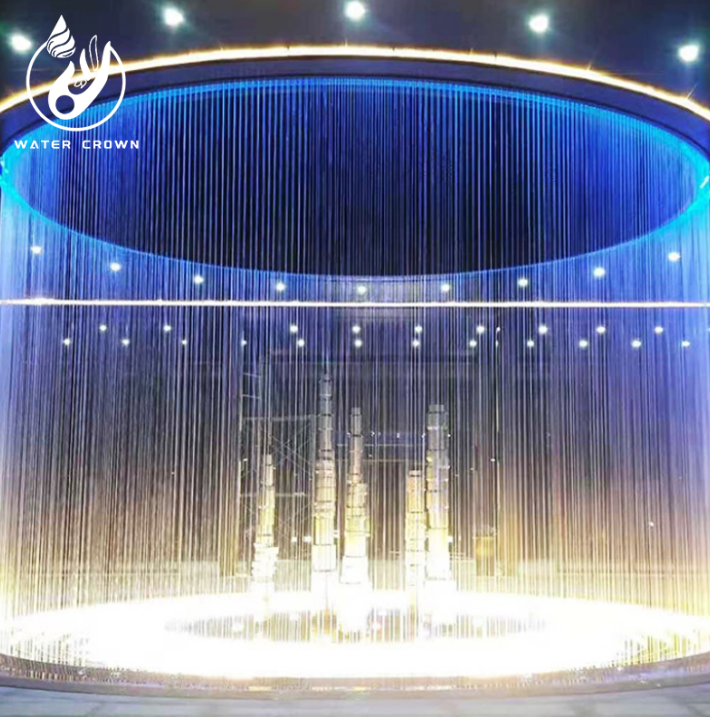
Understanding Digital Water Curtain Technology and Core Components
What is a digital water curtain? Definition and underlying technology
Digital water curtains turn ordinary water into something pretty amazing when it comes to visuals. They work through carefully controlled valves and LED lights that flash at just the right moments. Think about it this way: instead of just seeing water fall down like normal fountains do, these high tech displays actually form letters, company logos, or even moving pictures from the droplets themselves. Pretty cool stuff! The latest setups have software that controls all those nozzles on the fly, which lets them hit frame rates between 50 and 90 per second. That's actually not far off from what we see on regular digital signs around town. Some people say watching these water screens is almost like watching a movie made out of liquid.
Precision nozzles and real-time software: Enabling dynamic water displays
Stainless steel nozzles between 0.8 and 2mm in size are typically set up in grid formations and connected to solenoid valves that react really fast, about 10 milliseconds. Most industry guidelines suggest that a regular 3 meter by 2 meter water curtain needs somewhere between 200 to 400 of these nozzles to produce high definition images. The control software takes whatever visual content needs displaying and translates it into exact valve operations. It adjusts the timing based on how gravity affects falling water droplets at around 9.8 meters per second squared. This helps make sure each drop lands exactly where it should be for clear image formation.
How digital control systems manipulate water flow for visual effects
Advanced algorithms manage three key layers:
- Hydraulic synchronization: Maintaining consistent water pressure (typically 2–4 bar) across all nozzles
- Valve timing precision: Compensating for minor delays in valve closure to form coherent shapes mid-air
- Environmental adaptation: Automatically adjusting for wind interference and temperature-related changes in water viscosity
Modern systems achieve 1mm droplet accuracy using PWM (Pulse Width Modulation) valve control, enabling complex effects like scrolling text or motion-responsive patterns—critical for reliable performance in commercial environments.
Customization and Interactive Capabilities for Audience Engagement
Display Customization: Logos, Text, Animations, and Brand Content
Water curtain displays have become pretty cool branding solutions these days. They can basically show company logos, moving graphics, and all sorts of custom images by controlling how water moves through nozzles. The vector designs work really well because they scale without losing quality when projected onto flowing water surfaces. Some research indicates that when stores use customized visuals like this, people tend to hang around about 20% longer than usual. And let's face it, when customers interact with those fancy water displays, they remember the brand better too. It's not just eye candy though the technology behind making those images stick to water is actually quite impressive.
Interactive Features Using Motion Sensors and Real-Time Responsiveness
Equipped with infrared sensors and machine learning, these systems detect audience movement and react within 50ms—creating ripples that follow pedestrians or dissolving patterns when approached. This real-time responsiveness enhances experiential impact without compromising structural stability, making it ideal for high-traffic public installations.
Balancing Interactivity with Operational Complexity and Maintenance
While interactivity boosts engagement, it demands rigorous maintenance. Integrated particulate filtration prevents nozzle clogs, and predictive analytics monitor pump health, reducing downtime by 35%. Operators should assess the return on investment between highly programmed interactive features and simpler, durable branding solutions based on usage context and maintenance capacity.
Enhancing Aesthetic Appeal and Architectural Design in Commercial Spaces
Digital Water Curtains as Dynamic Architectural Elements
Architects increasingly incorporate digital water curtains as kinetic art elements that redefine spatial boundaries. These installations merge hydraulics with programmable LED lighting to create evolving façades that respond to environmental inputs such as sunlight or crowd density, transforming static architecture into living, adaptive surfaces.
Creating Atmosphere and Visual Interest in Lobbies, Malls, and Plazas
Water features combined with lights tend to draw attention in busy spots where people walk through all day. These installations help folks navigate better while also making loud spaces feel quieter somehow. Some research from last year looked at shopping centers and discovered something interesting. Malls that had those fancy digital water walls instead of regular statues kept visitors around 18% longer than before. That's pretty significant when we think about how stores want customers to spend more time inside. The findings suggest these dynamic displays do more than just look good they actually change how people experience commercial spaces.
Innovative Design Techniques for Water Curtain Walls and Facades
Modern designers have started incorporating aerodynamic nozzles that keep things looking clear even when winds reach around 15 miles per hour or so. When paired with tempered glass channels and hidden supports, these setups can create impressive water walls that stretch well beyond 40 feet without any visible framework. The latest improvements in laminar flow tech are making a real difference too. Water streams stay remarkably clear, which makes projections look better on them. Plus, these new systems use about half as much water compared to older fountain designs, saving resources without sacrificing visual impact.
Integration with Multimedia and Branding Systems for Immersive Experiences
Synchronizing Water Effects with Lighting, Sound, and User Interaction
Digital water curtains work together with lights, sounds, and touch screens thanks to some pretty smart control software that keeps everything synced within about 200 milliseconds. What this means is we can create performances where the water moves right along with the beat of music or changes based on what people do nearby. These aren't just static displays anymore but full blown sensory experiences that grab attention. They're great for launching new products or creating those special atmosphere moments at events.
Delivering Branded Experiences Through Synchronized Multimedia Displays
What these systems really do is act like moving billboards, showing off company logos, holiday themes, or fancy promotional videos through water displays that can be programmed. A recent 2023 report on experiential marketing found something interesting: places that combine water features with lights and music keep people around for about 37 percent longer compared to spots with just regular old static displays. And when we look at retail spaces specifically, stores that create experiences engaging multiple senses tend to boost how valuable customers perceive their brands to be. One study from the Sensory Engagement Index back in 2024 showed brand value perceptions going up as much as 29 percent in such environments.
Case Study: Luxury Hotel Lobby with Integrated Water, Light, and Sound
One major international hotel group recently put in place this amazing 12 meter wide digital water display that actually reacts when people walk past it, showing off moving images of their brand logo and stuff. There are also these hidden speakers playing background music that changes depending on where the hotel is located. Think jungle noises at beach resorts or something like that. Most guests seem really impressed too, with nearly nine out of ten saying they felt like they were being transported somewhere special when arriving. And there's another bonus too - the whole setup saves about 18 percent on water compared to regular old fountains. So it looks good and works well at the same time.
Commercial Applications and Strategic Benefits Across Industries
Use Cases in Retail, Hospitality, and High-Traffic Public Spaces
Retailers, hotels, and transportation centers around the world are increasingly turning to digital water curtains as statement pieces that completely change how people experience these spaces. High-end shops install them to draw attention to specific product displays, creating those eye-catching zones where customers stop and look. Many upscale hotels have started putting these flowing water features right behind check-in desks too. Take Singapore's Jewel Changi for instance – it has this massive indoor waterfall that not only looks amazing but actually helps reduce stress levels among travelers passing through the busy airport terminal. These installations work on multiple levels at once.
Driving Foot Traffic and Brand Engagement in Shopping Centers
Retail analytics from 2023 show that shopping centers featuring interactive water displays actually keep visitors around for about 18% longer than those without such attractions. These digital water curtains are pretty cool too since they respond to people walking by, changing patterns as folks pass through, which makes for great photos shared across social networks. Take Dubai Festival City for instance. After installing these water features, they saw foot traffic jump by nearly 27%. That kind of boost speaks volumes about how these installations can naturally draw attention and generate buzz without any extra advertising spend.
Trend Analysis: Growth of Digital Water Curtains in Experiential Marketing
The experiential technology market, including digital water displays, is projected to grow at a 12.4% CAGR through 2028. Key adoption drivers include:
- Reduced nozzle maintenance costs (down 40% since 2020)
- Rising demand for visually striking, photo-worthy public art
- Integration with AR platforms for hybrid physical-digital experiences
Brands are leveraging this trend with time-limited campaigns, such as Coca-Cola’s 2022 Times Square activation where product silhouettes emerged in falling water during product launches—demonstrating the medium’s power in modern brand storytelling.
Table of Contents
- Understanding Digital Water Curtain Technology and Core Components
- Customization and Interactive Capabilities for Audience Engagement
- Enhancing Aesthetic Appeal and Architectural Design in Commercial Spaces
- Integration with Multimedia and Branding Systems for Immersive Experiences
- Commercial Applications and Strategic Benefits Across Industries