
 EN



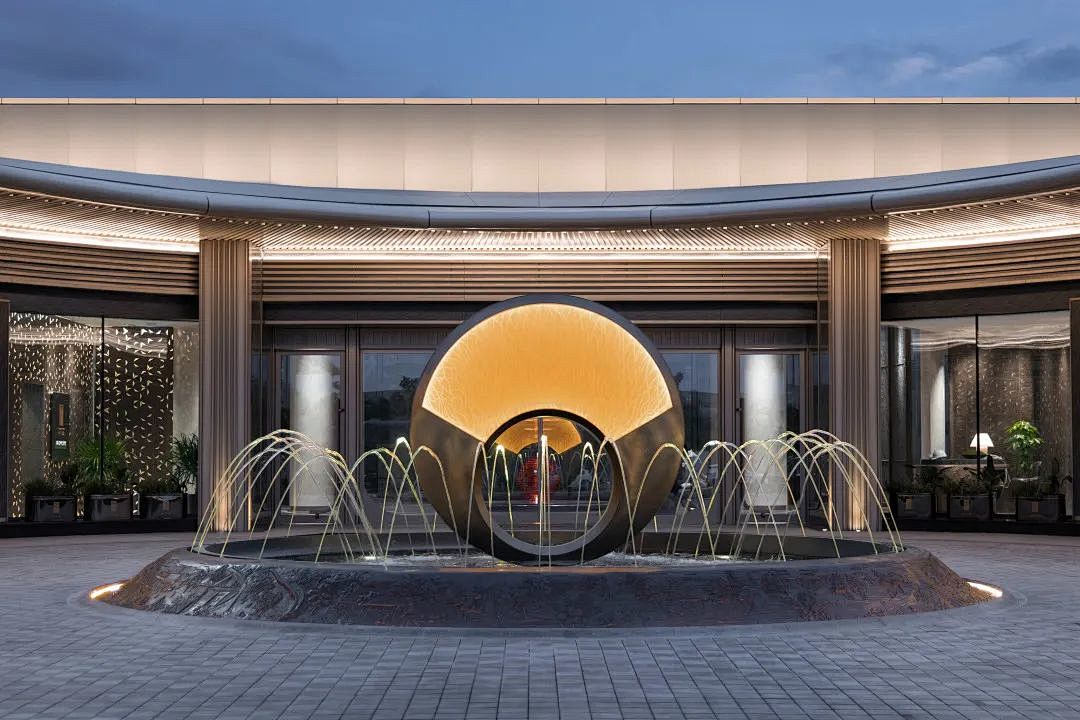
Field Observations in Crafting Pyrotechnic Aquatic Visuals
Designing large-scale water spectacles that captivate international audiences requires transforming rigid hydraulic jets into fluid, organic forms that mirror natural phenomena. Among the most sought-after visual effects in modern show design is the aerial firework burst—a sweeping, fan-shaped sheet of water that erupts outward before gracefully cascading down in sparkling droplets. Experiencing these shows from the control room highlights a distinct engineering reality: standard clear-stream jet nozzles cannot achieve this effect. Solid jet nozzles produce tight, linear columns of water that lack the surface area and lateral spread needed to simulate bursting pyrotechnics. To achieve a majestic fan arc spray in a dancing fountain, aquatic designers rely specifically on specialized fan jet nozzles, often referred to across the industry as peacock tail nozzles or broad-flat spray nozzles. When properly calibrated, these precision components convert concentrated kinetic water pressure into an expanding parabolic water curtain that instantly catches light and fills the night horizon.
Hydraulic Principles and Interior Nozzle Geometry
Creating a flawless, fireworks-like fan spray requires rigorous fluid dynamics control inside the nozzle body. As pressurized water enters a standard pipe, chaotic internal turbulence often causes the exiting water stream to split into messy, uneven droplets prematurely. High-performance fan arc nozzles overcome this by integrating internal anti-turbulence vanes and flow-rectifying chambers. These internal guide structures smooth out fluid swirls, organizing chaotic water particles into a uniform, laminar stream before reaching the exit orifice. The nozzle orifice itself is machined with a precision parabolic slit or V-shaped deflection aperture. As water forces its way through this geometry, lateral pressure forces the fluid outward into a flattened sheet. The resulting water curtain maintains high structural velocity near the nozzle base, expanding outward into an elegant fan arc that atomizes into fine, glittering droplets at its apex, perfectly mimicking the trailing embers of a firework shell.
Dynamic Motion Control and Motorized Swivel Integration
While a stationary fan nozzle creates an impressive static water wall, integrating dynamic motorized movement elevates the visual experience into a true dancing fountain spectacle. Modern aquatic choreography connects fan arc nozzles directly to high-torque dual-axis 2D or 3D digital swivel mechanisms driven by industrial stepper or servo motors. By pivoting the fan nozzle along horizontal and vertical planes in millisecond synchronization with music, the sweeping water sheet traces dramatic paths across the sky. Choreographers can program rapid sweeping arcs, overlapping wave sequences, or sudden vertical bursts that simulate multi-shot pyrotechnic barrages launching directly from the water surface. When multiple motorized fan nozzles rotate in opposing directions simultaneously, the intersecting translucent water sheets create complex, multi-layered visual waves that give audiences the thrilling illusion of continuous aerial fireworks.
Photometric Coverage, DMX Illumination, and Visual Drama
The striking resemblance between a fan arc water spray and real fireworks depends heavily on synchronized underwater illumination. From an optical standpoint, a fan nozzle spreads a concentrated volume of water into a broad, thin, semi-transparent sheet, offering a dramatically larger surface area for light absorption compared to narrow cylinder jets. Positioning high-output RGBW LED ring lights or underwater spotlights directly around the nozzle base allows light rays to travel upward inside the water sheet via total internal reflection. Controlled via DMX512 or Art-Net communication protocols, the lighting system delivers instantaneous color changes timed to musical beats. Pulses of crimson, gold, emerald, and bright white light surge along the rising fan arc, transforming the fluid sheet into vibrant, glowing streams that illuminate the night air like exploding fireworks.
Structural Resilience, Precision Tooling, and Global Manufacturing Standards
Operating fan arc nozzles in demanding aquatic environments—such as open lakes, coastal seawater installations, or high-capacity municipal pools—demands exceptional structural durability and manufacturing precision. Because fan nozzles feature narrow, high-precision aperture slits, minor variations in machining tolerances or waterborne debris can distort the water sheet, causing uneven spray patterns. Professional-grade fountain installations specify high-grade SS304 or SS316 stainless steel and solid brass components to resist cavitation, biofouling, and mineral corrosion over years of continuous operation. Delivering this level of hydraulic balance, structural longevity, and complex OEM/ODM manufacturing capability requires specialized production infrastructure. Drawing on more than a decade of specialized aquatic engineering experience, Water Crown integrates advanced CNC machining, rigorous pressure-testing protocols, and full-scope manufacturing capabilities, delivering certified, high-performance fountain hardware and complete application solutions to global project developers worldwide.