
 EN
EN


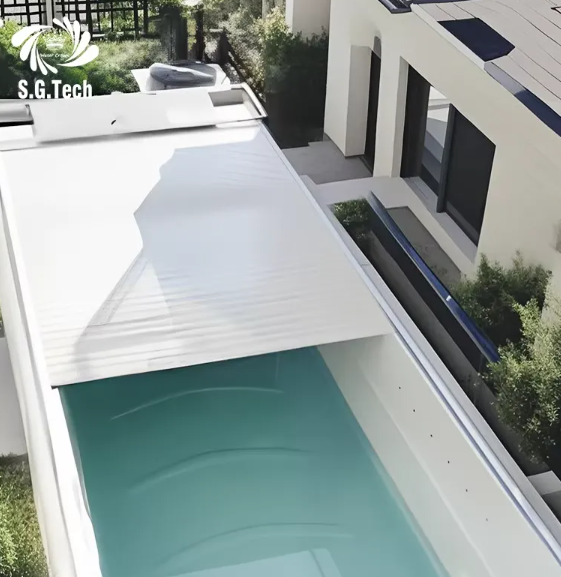
Pool Size and Shape: Ensuring a Precision Fit for Custom Pool Covers
Commercial pools require custom covers that match their exact dimensions to maximize safety, energy efficiency, and debris prevention. Even a 1-2 inch gap can reduce thermal retention by up to 15% (Aquatic Facility Engineering 2023), making millimeter-level accuracy essential during measurement.
Accurate Measurement and Fit for Custom Pool Cover Effectiveness
Advanced techniques like 3D laser mapping and CAD modeling ensure precise fit for rectangular, oval, and geometric pool designs. For standard 50-meter Olympic pools, measurement errors exceeding 0.5% can disrupt hydraulic compatibility with filtration systems, affecting water flow and chemical balance.
Custom Fitting Pool Covers for Unique Pool Shapes
Freeform kidney-shaped leisure pools and infinity-edge resort pools often require multi-panel covers with reinforced stitching at high-stress curvature points. Waterpark splash pads may need 5–7 custom segments to accommodate integrated seating, play structures, and variable depths.
Challenges in Measuring Irregular Commercial Pool Geometries
Angled beach entries, vanishing edges, and attached spas complicate accurate measurements. A 2023 survey found that 68% of aquatic facilities with tiered or hybrid designs required at least one cover adjustment during installation due to initial measurement inaccuracies.
Case Study: Tailoring a Custom Pool Cover for an L-Shaped Resort Pool
A coastal resort reduced seasonal maintenance costs by 30% after installing a dual-track automated cover system on its 110’ x 60’ L-shaped pool. The design addressed 135-degree corner stress points and uneven deck elevations using segmented reinforcements and adjustable anchoring, ensuring full coverage without sagging or strain.
Compliance with Safety Standards for Commercial Custom Pool Cover Manufacturing
Safety Standards and Compliance (e.g., ASTM, UL) for Commercial Applications
For commercial pools, custom covers need to pass certain safety tests before they can be used. The big ones are ASTM International's F1346-91 standard and the UL 1795 listing requirements. What do these actually check? Well, one important thing is how much weight the cover can hold - at least 485 pounds per square foot according to ASTM specs. They also look at those anti-entrapment features that prevent accidents around drains and other openings. Safety first, right? According to research from the Ponemon Institute back in 2023, places that stick with certified covers see about 32 percent fewer problems than those without proper certification. Makes sense when you think about it.
ASTM F1346-91 and Its Role in Safety Pool Cover Certification
The ASTM F1346-91 standard establishes minimum performance requirements for safety covers, basically saying they need to hold up under pretty heavy weights without breaking apart. The specs call for reinforced materials at points where most stress occurs, plus regular checks every year if used commercially. According to research from 2021, safety covers that follow this standard experience around 89 percent fewer failures when subjected to constant foot traffic compared to those that don't meet the criteria. That makes a real difference in places like public swimming pools or industrial facilities where cover integrity is absolutely critical.
How Compliance Reduces Liability in Public Aquatic Facilities
Covers that meet certification standards work within OSHA guidelines as well as local construction regulations, which helps cut down on potential legal problems. Facilities in public spaces that install covers meeting ASTM or UL requirements tend to see around an 80 percent drop in claims where someone gets hurt or worse because of water pooling or falling in accidentally. The covers just hold up better under these conditions. Many insurance companies actually reward this kind of compliance too, sometimes cutting premiums by as much as 15 percent when they see proper installation has taken place.
Material Quality and Environmental Durability of Custom Pool Covers
Durability and Material Quality of Pool Covers in Long-Term Use
Industrial-grade materials enable commercial pool covers to last 12–15 years. Features like reinforced seams, UV-inhibited polymers, and chlorine-resistant coatings prevent degradation from chemical exposure and mechanical wear. In coastal regions, saltwater-compatible stitching reduces material failures by 23% (Aquatic Safety Journal 2022).
Material Performance Under UV Exposure, Temperature Swings, and Precipitation
The premium vinyl we're talking about keeps around 94% of its tensile strength even after sitting through 5,000 hours of those harsh UV tests in labs. That's actually about 37 percentage points ahead of what regular models manage. Our covers work great from super cold temps down at minus 30 degrees Fahrenheit all the way up to blistering 120 degrees. They stay flexible so they won't crack when frozen then thawed again and again, nor will they warp under the relentless desert sun. And get this the waterproof membranes can handle rain falling at four inches per hour straight through without letting water seep past those seals.
Comparative Analysis: Vinyl vs. Mesh Safety Pool Cover Materials
| Factor | Vinyl Covers | Mesh Covers |
|---|---|---|
| UV Resistance | 15+ years with UV inhibitors | 8-10 years with treatment |
| Debris Protection | Complete barrier | Partial filtration |
| Wind Load Capacity | 75 mph rating | 50 mph rating |
| Maintenance | Weekly cleaning required | Biweekly cleaning |
Trend: Advancements in UV-Resistant Polymers for Extended Lifespan
Next-generation cross-linked polyethylene (PEX) combines UV stabilizers with antimicrobial properties, extending service life by 40% over traditional PVC blends. Lab tests show these materials retain 89% flexibility after a decade of simulated Arizona sun exposure.
Data Point: 40% Longer Service Life With Reinforced Vinyl in High-Sunlight Regions
In Florida and Texas, triple-layered vinyl covers with titanium dioxide additives achieve an average 14-year lifespan–40% longer than standard covers (Pool & Spa Maintenance Report 2023). This durability translates to lifecycle savings of $18 per square foot over ten years.
Climate Adaptation and Weather Resilience in Custom Pool Cover Selection
Commercial operators must select custom pool covers tailored to regional climate conditions to ensure year-round protection and longevity. Facilities facing temperature extremes above 100°F or below freezing require thermally resilient materials, while coastal sites need corrosion-resistant components.
Climate Considerations (Temperature, Precipitation, UV Exposure)
Key climate factors include:
- Temperature ranges: Polymer-based covers perform better than standard vinyl in sub-zero conditions
- Annual precipitation: Sites with over 60 inches of rain annually benefit from integrated drainage channels
- UV intensity: In the Southwest U.S., UV-stabilized additives extend cover life by 2.3x compared to basic models
Performance of Custom Pool Covers in Freeze-Thaw Cycles
Modern composite covers endure 50+ freeze-thaw cycles without failure. Reinforced seams resist ice-induced tearing, and hydrophobic coatings reduce water retention by 37%. Minnesota facilities reported 92% fewer winter-related replacements after switching to freeze-optimized covers.
Strategy: Selecting Covers Based on Seasonal Weather Patterns
Facilities with dramatic seasonal shifts benefit from dual-cover systems:
- Heavy-duty winter covers rated for 300+ lb/sq ft snow load
- Lightweight summer solar covers with 98% UV reflectivity
Mid-Atlantic resorts using this strategy reduced annual maintenance costs by $18,000 between 2019 and 2023 while increasing cover lifespan by 40%.
Balancing Budget, Maintenance, and Long-Term Value in Custom Pool Cover Investment
Installation and Budget Trade-Offs in Premium Custom Pool Cover Systems
While automated systems cost 30–50% more upfront than manual options, they deliver long-term operational savings. A 2023 industry survey found that 68% of operators recovered automation costs within five years through labor reduction and consistent energy conservation.
Warranty and Support: Evaluating Manufacturer Reliability
Choose suppliers offering at least a 10-year warranty on mechanisms and a proven record of claim fulfillment. Facilities working with manufacturers that provide dedicated technical support experience 40% fewer emergency service calls, according to industrial safety reports.
Lifecycle Cost Analysis: Initial Investment vs. 10-Year Maintenance
| Cost Category | Manual Covers | Automated Covers |
|---|---|---|
| Installation | $12,000 | $28,000 |
| Annual Maintenance | $3,200 | $1,100 |
| 10-Year Energy Savings | $18,000 | $34,000 |
This analysis shows how automation pays for itself through lower operating costs in commercial applications.
Ease of Use and Maintenance in Daily Facility Operations
Motorized systems reduce staffing needs by 6–8 labor hours per week, according to pool operation benchmarks. Manual covers contribute to 17% of reported worker injuries in aquatic facilities due to repetitive strain during deployment.
Strategy: Integrating Automation Systems With Custom Cover Mechanisms
Forward-thinking operators are pairing IoT-enabled controllers with custom covers, achieving 92% compliance with daily safety protocols versus 64% at manually operated sites. These smart systems automatically adjust cover positions based on weather data and usage schedules, enhancing both safety and energy efficiency.
Table of Contents
- Pool Size and Shape: Ensuring a Precision Fit for Custom Pool Covers
- Compliance with Safety Standards for Commercial Custom Pool Cover Manufacturing
-
Material Quality and Environmental Durability of Custom Pool Covers
- Durability and Material Quality of Pool Covers in Long-Term Use
- Material Performance Under UV Exposure, Temperature Swings, and Precipitation
- Comparative Analysis: Vinyl vs. Mesh Safety Pool Cover Materials
- Trend: Advancements in UV-Resistant Polymers for Extended Lifespan
- Data Point: 40% Longer Service Life With Reinforced Vinyl in High-Sunlight Regions
- Climate Adaptation and Weather Resilience in Custom Pool Cover Selection
-
Balancing Budget, Maintenance, and Long-Term Value in Custom Pool Cover Investment
- Installation and Budget Trade-Offs in Premium Custom Pool Cover Systems
- Warranty and Support: Evaluating Manufacturer Reliability
- Lifecycle Cost Analysis: Initial Investment vs. 10-Year Maintenance
- Ease of Use and Maintenance in Daily Facility Operations
- Strategy: Integrating Automation Systems With Custom Cover Mechanisms